
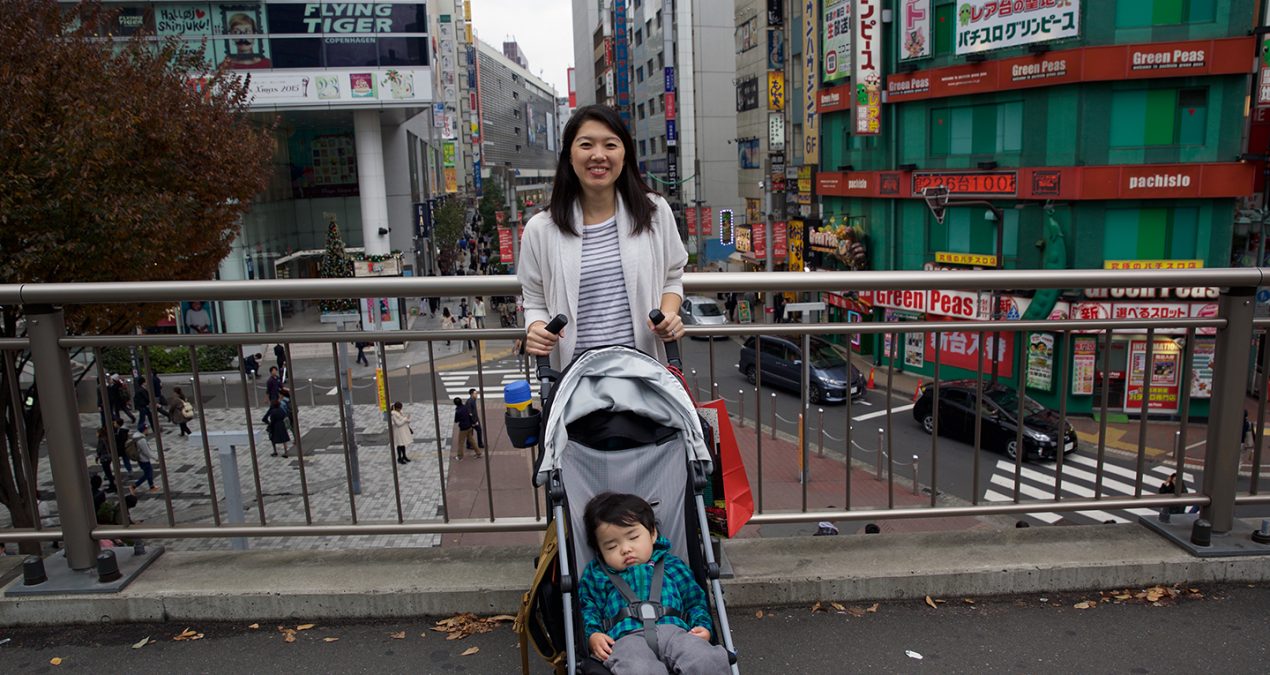
We are happy to report that our first trip to Japan with a baby was a success! Daren was 1 year 4 months, and Bel was ~5 months pregnant for this trip so needless to say, most of the travel and sightseeing this time around was catered towards baby-friendly environments and easy to access areas for both baby and mommy!
We were staying in Tokyo for 11 days total, and accordingly had a fairly extensive packing list. Because of the baby factor, there was understandingly a lot more prep work involved this time.
Now that we are back, here are some of our favorite tips for traveling in Tokyo with a baby, YMMV of course 🙂
Our baby pack list was pretty standard to start:
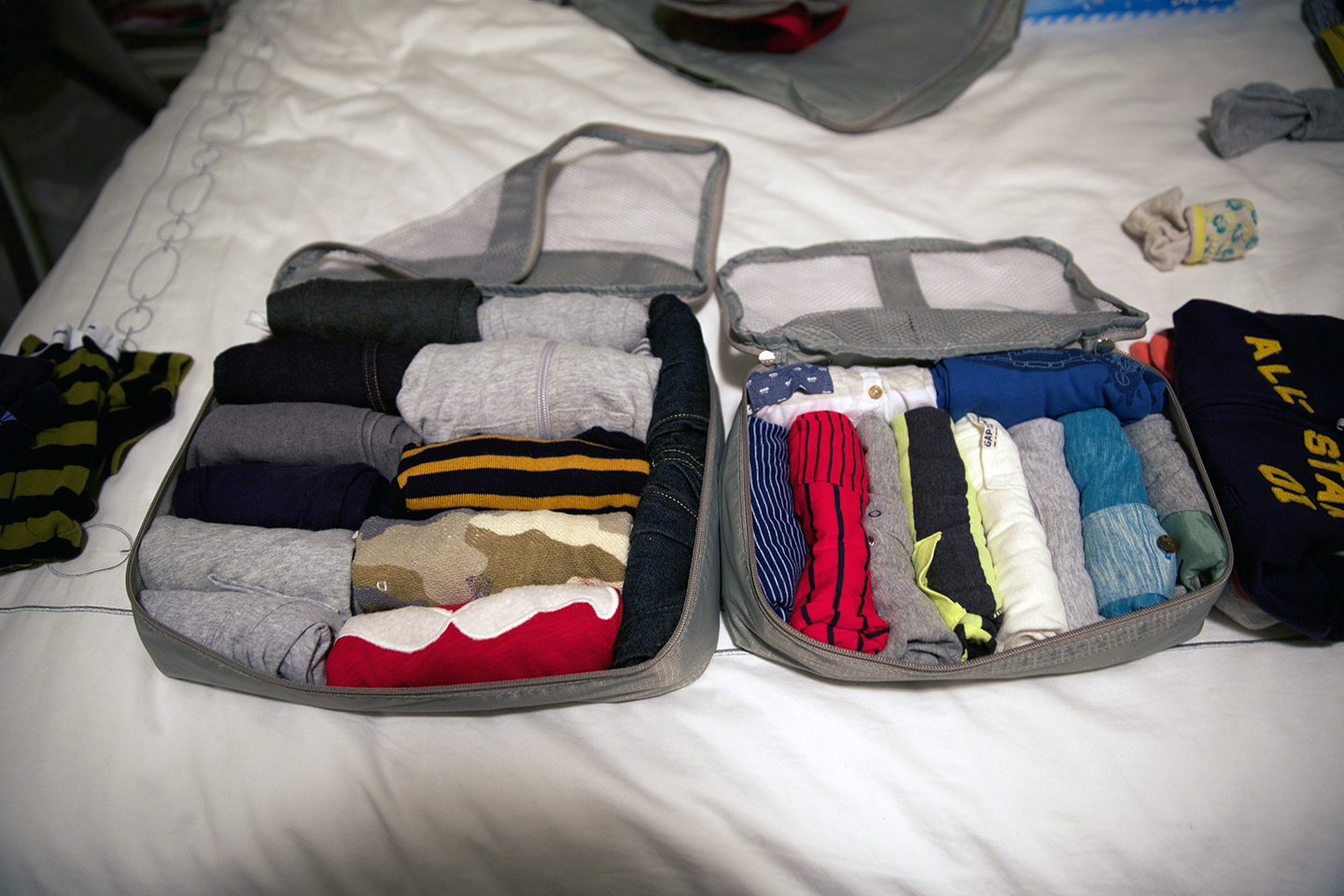
Daren’s clothes neatly folded… for now…
- baby clothes, hat, socks, jacket/sweater, blanket
- benadryl, thermometer, wipes, diaper cream, plastic bags,
- fork/spoon, bibs, scissors, sunscreen, shampoo, dishwashing soap, bottle brush, placemats,
- snacks, toys, books
Formula/Boxed Milk/Diapers:
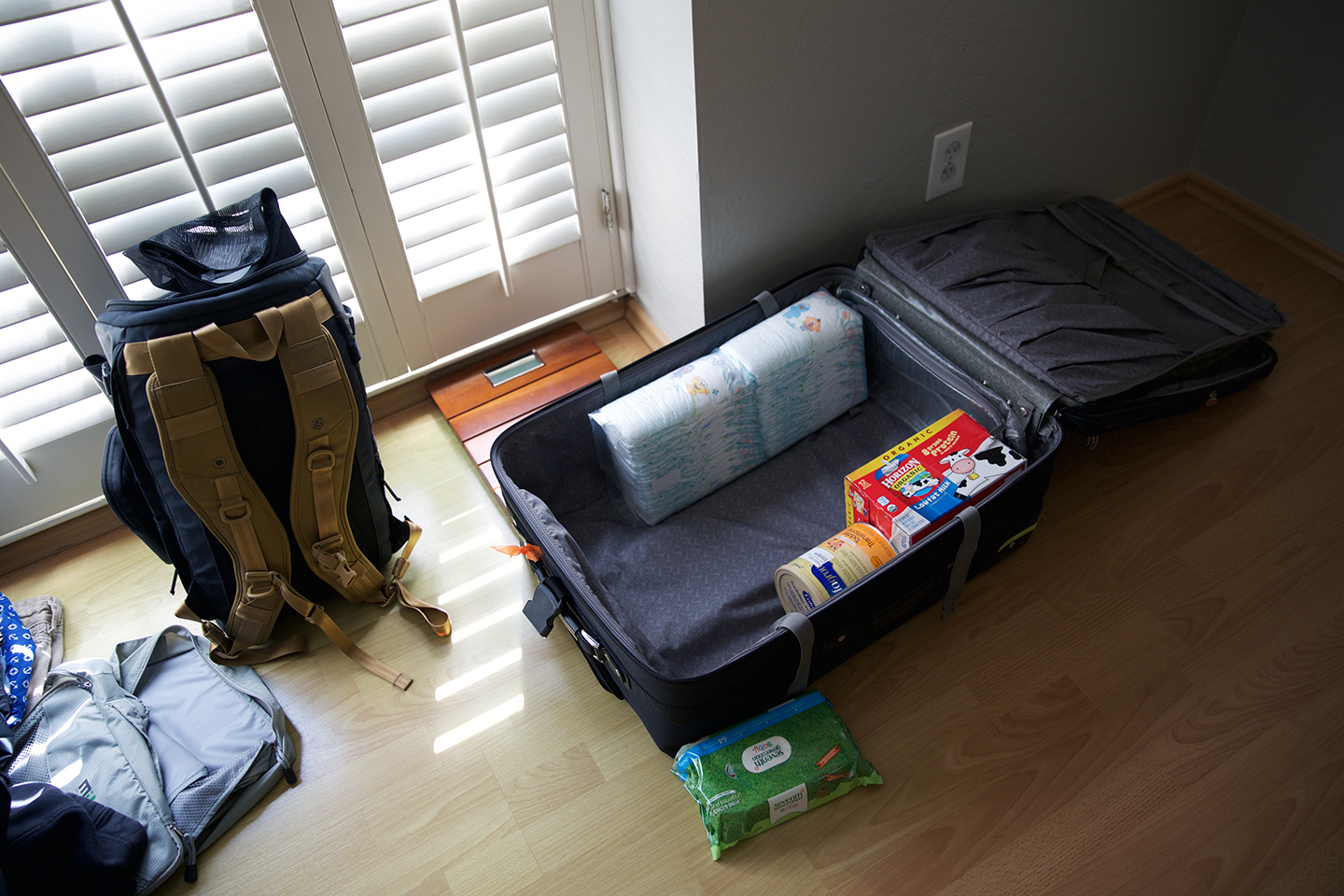
Our baby essentials
Aside from the standard pack list, we also we made sure we had enough of the essentials: Formula powder, boxed milk, and diapers.
Daren was still drinking a fair amount of formula so we decided to pack a 20oz canister in our luggage. Easy!
We also brought with us a carton (12 packs) of single serving boxed horizon milk just in case Daren didn’t like the milk in Japan (more on that to come). This was definitely more of a “just in case” kinda thing and totally not essential to every baby. The single boxes of horizon milk are great because they travel really well and do not need refrigeration. Pretty awesome!
In hindsight, it was a good thing we packed all of the above because Daren had a hard time adjusting to the local time and food, so we relied a lot on formula and boxed milk in the beginning.
Some other helpful tips:
Buying diapers in Japan:
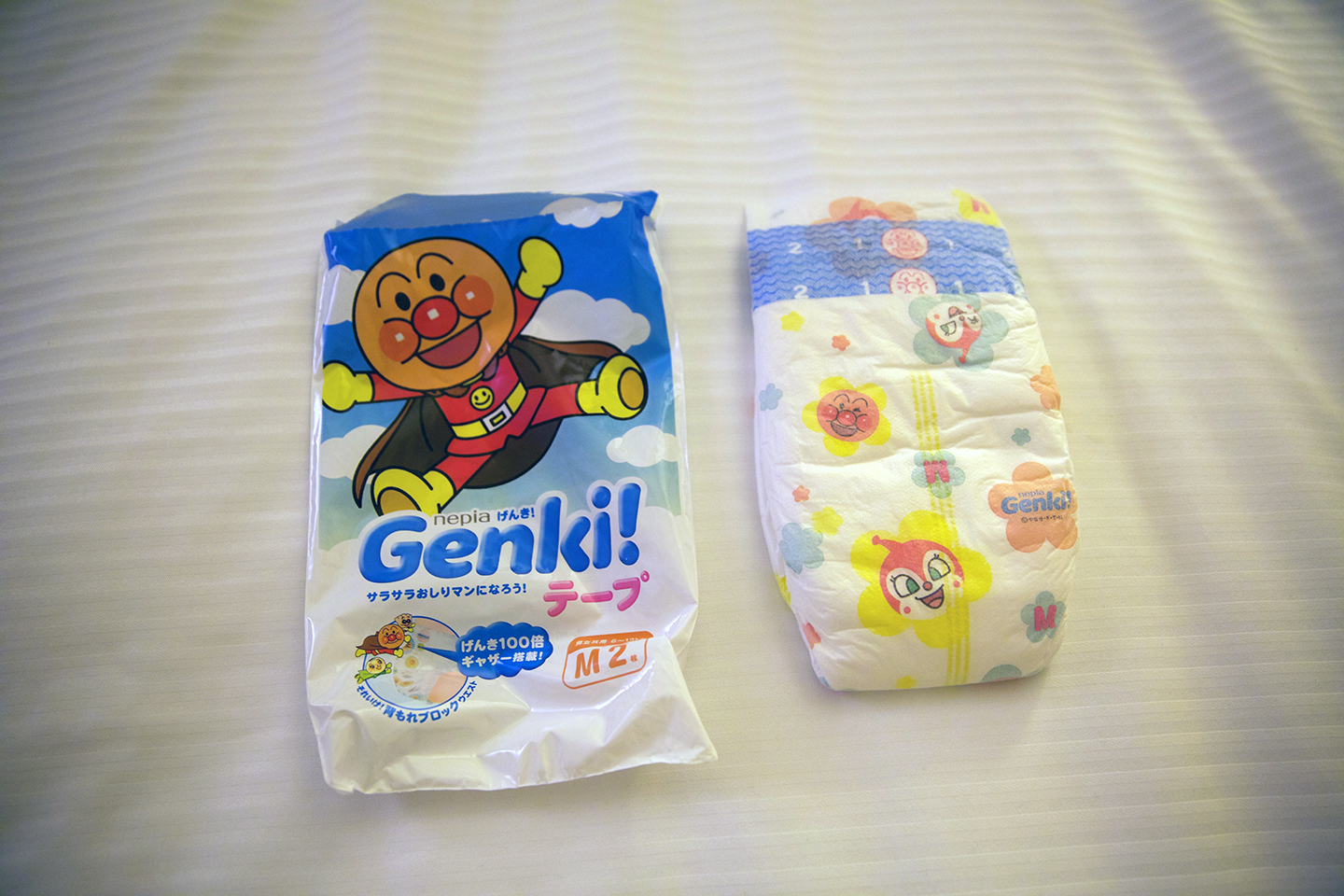
Our Plan B Diaper option: We found these Genki brand diapers in a local pharmacy.
We thought we planned for enough diapers throughout the trip, but sure enough Daren found a way to use more than we planned for! Luckily, we managed to find some diapers for sale in a few pharmacies (we didn’t see them in any supermarkets).
The pharmacies in Japan are kinda like mini-Walgreens/CVS stores in that they sell all kinds of goods (not just medicine). We saw a pampers brand in 36 count in one store, and smaller 2 count packs of a japanese brand in another. We opted for the smaller packs just in case we didn’t buy the correct size. The sizes came in Small, Medium, Large, but there were weight recommendations per size (in kilograms).
Buying milk in Japan:
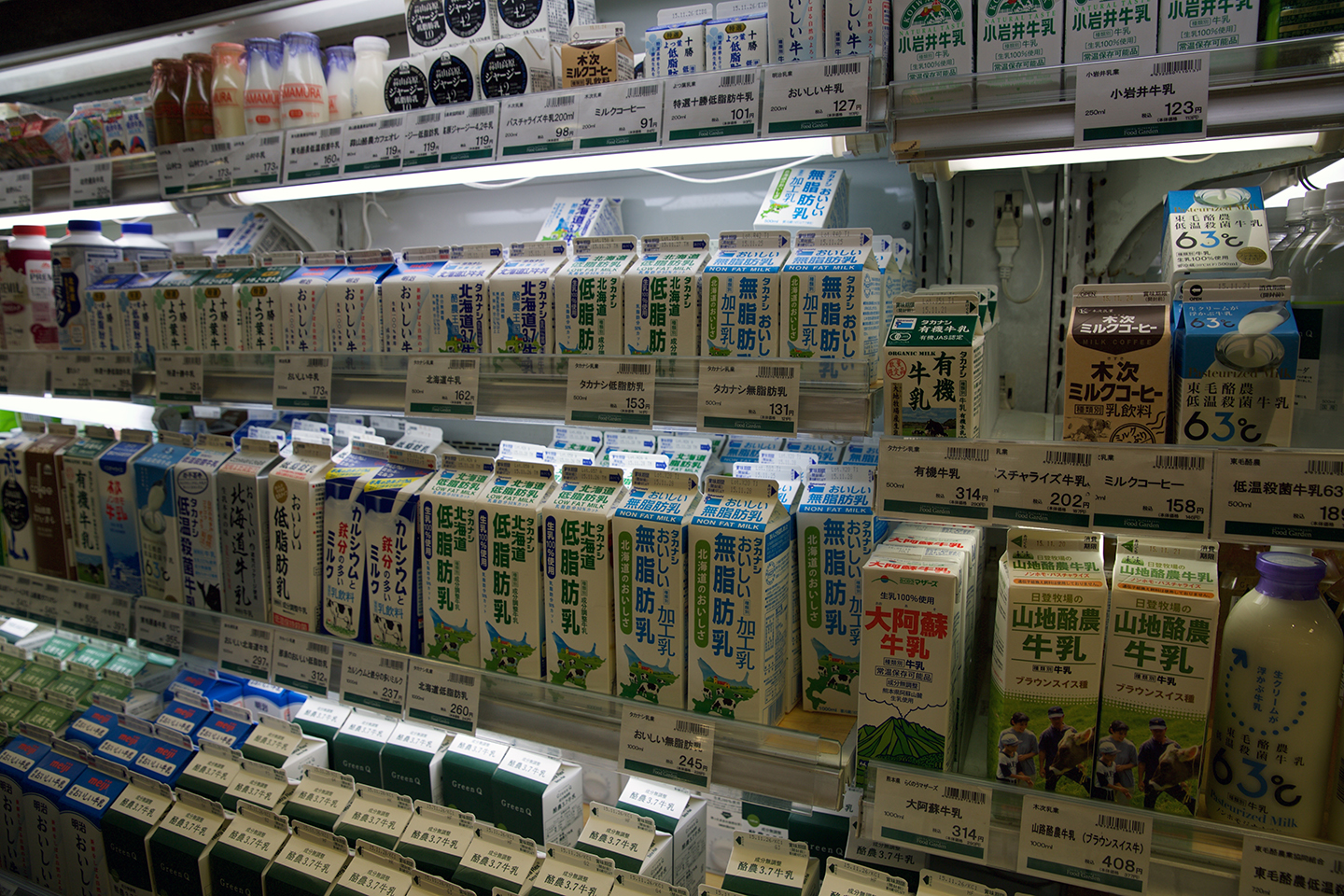
endless choices of milk…
We were doing fine on a combo of formula/boxed milk for a majority of the trip, until we noticed we were running out of both! Off to the market, although that wasn’t so easy! The choices of milk at a Japanese supermarket are simply exhausting… nonfat, skim, lowfat, whole, organic, pasteurized, unpasteurized… with really no discernible visual clue as to what is what, especially if you can’t read all the Japanese characters like me.
The first thing we noticed was that the whole milk in Japan was a lot richer than in the US, and Daren ended up throwing up the first batch even when we mixed half of it with formula. For the second try, we opted for a lowfat version and Daren managed to keep that down. Yay! We ended up buying the lowfat version throughout the rest of our trip.
Tip: Ask for help choosing a milk. We almost picked an unpasteurized version before asking!
Umbrella stroller:
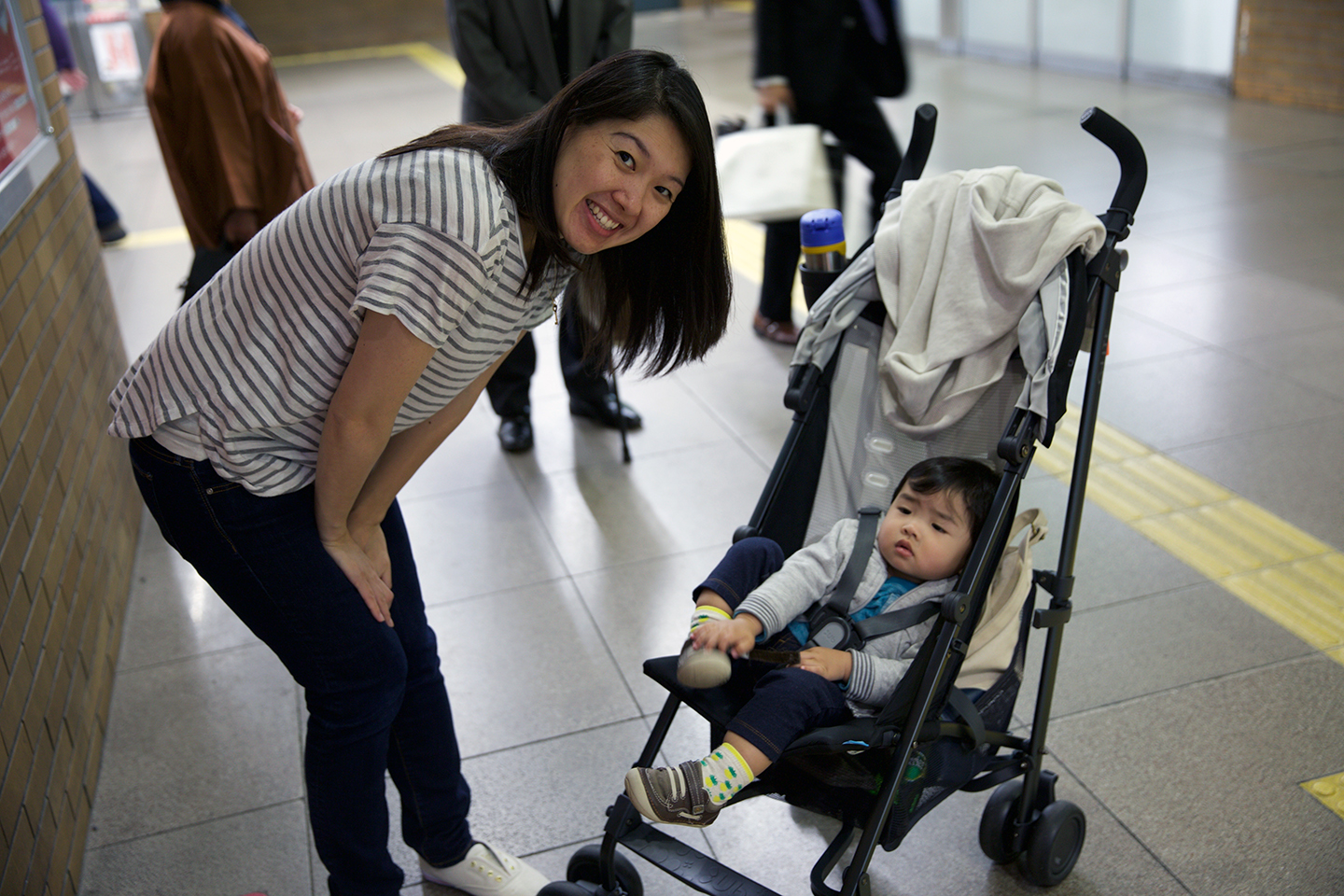
our Uppa-baby umbrella stroller
We invested in a light-weight umbrella stroller early on and it came in handy for this trip. Japan has a lot of narrow areas (especially inside the subway stations) so a smaller stroller was easy to navigate in crowded places. Our stroller was also able to fit through most of the standard enter/exit train stalls making it even more convenient. We did see some people using larger strollers like the bugaboo bee so that’s definitely not a problem either.
Subway stations with a baby:
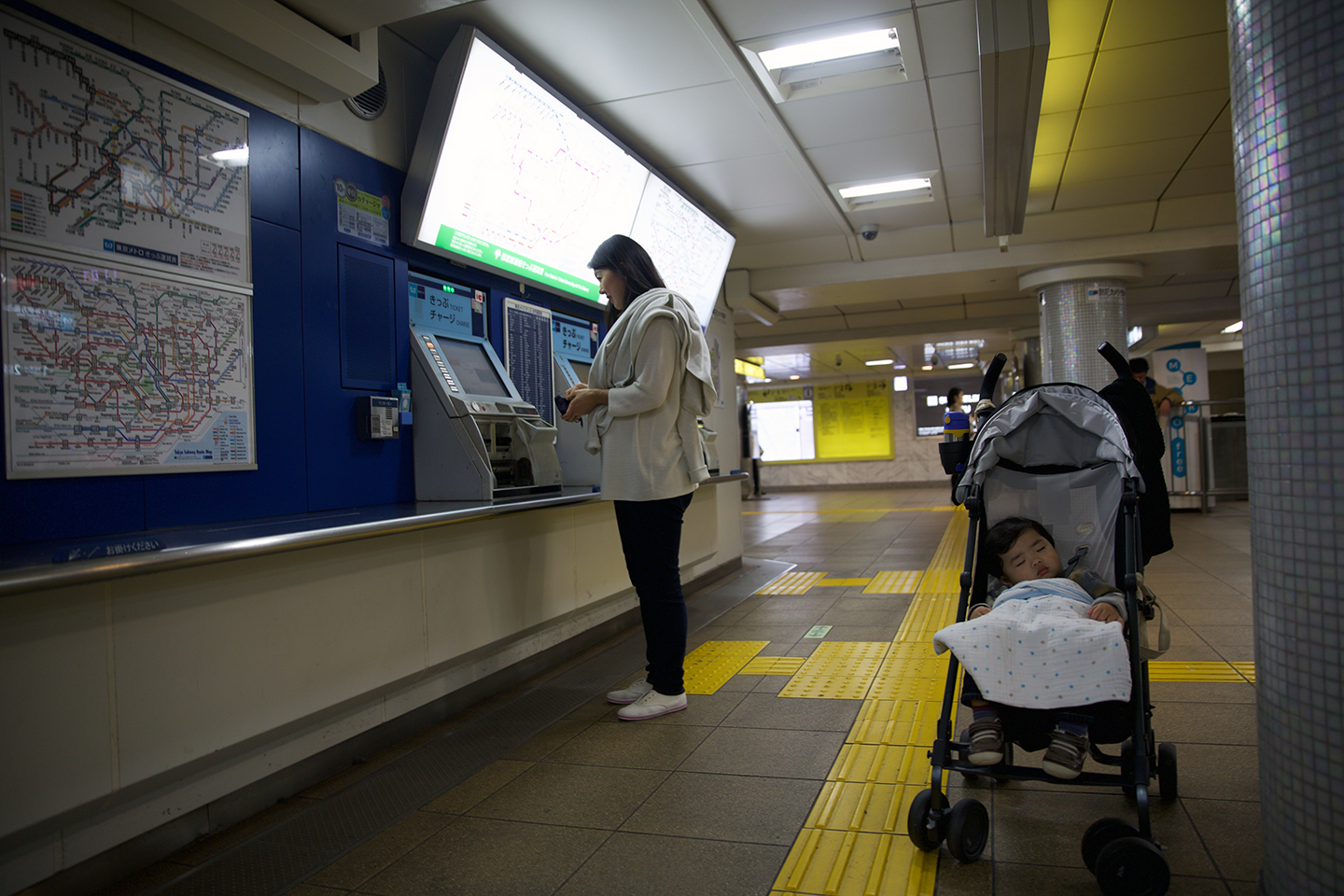
Purchasing tickets to the train
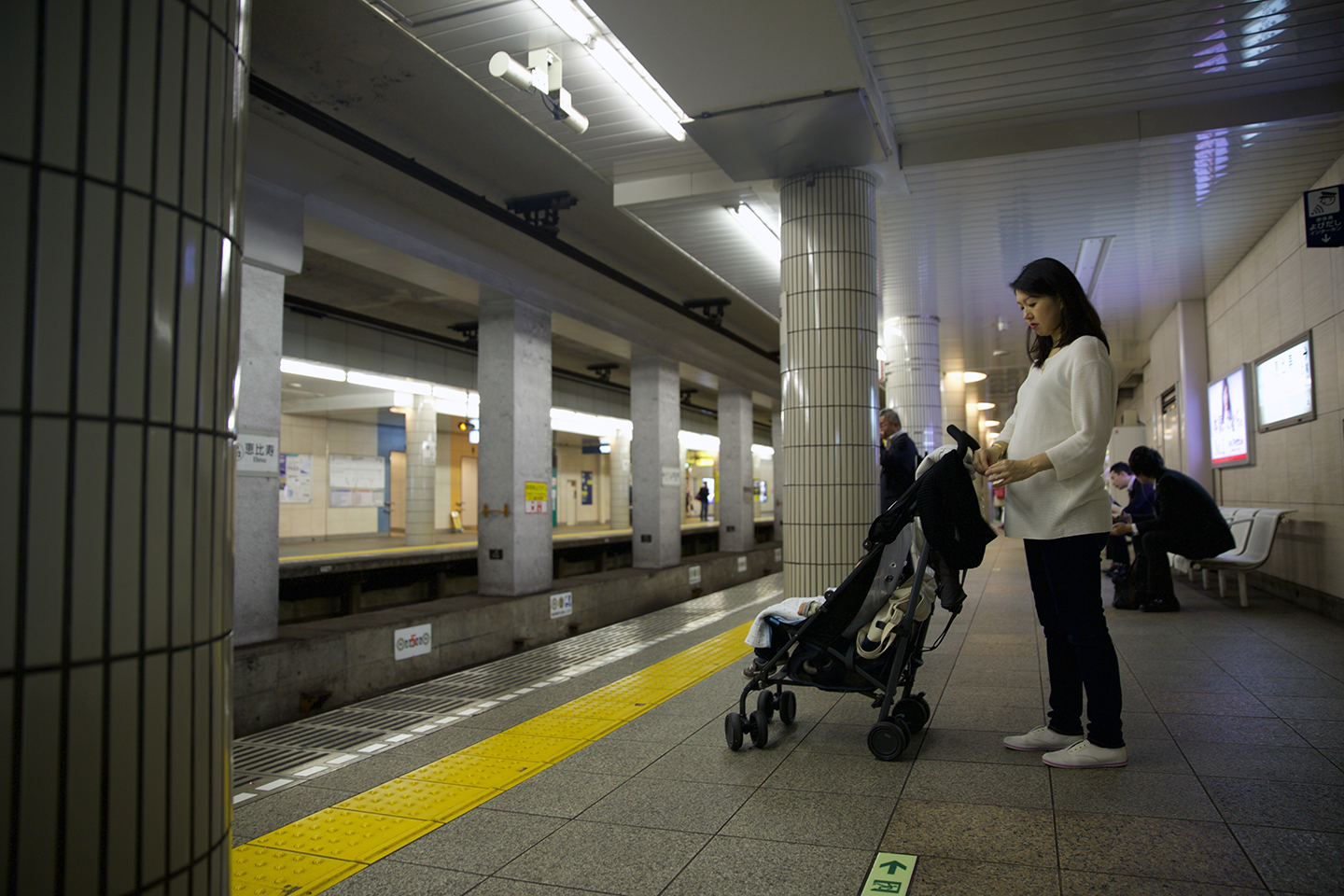
Waiting for the train to arrive. Avoiding rush hour commute times is key
Japan has one of the most efficient and clean subway stations in the world! That said, it is definitely geared towards the working class and not necessarily families with a baby stroller. Although some stations were fairly straight forward, others took some navigating to figure out how to get to the correct place.
Most stations have the ticket entry and train access on separate floors so most likely you will need to encounter an elevator at some point if you have a stroller (and strollers on escalators are not allowed). Also keep in mind that some stations may have multiple entrances, and only 1 of those entrances might have access to an elevator. (for ex: Shibuya station has North, South, East and West entrances, but the elevator is only accessible from the South entrance). When in doubt, ask the station attendant and they will point you in the right direction.
Tip: Instead of purchasing individual train tickets, you can pick up a Suica card (similar to a Clipper card) at any travel office outside of major stations. Note that there are several train lines however, and the Suica card will only work on JR lines.
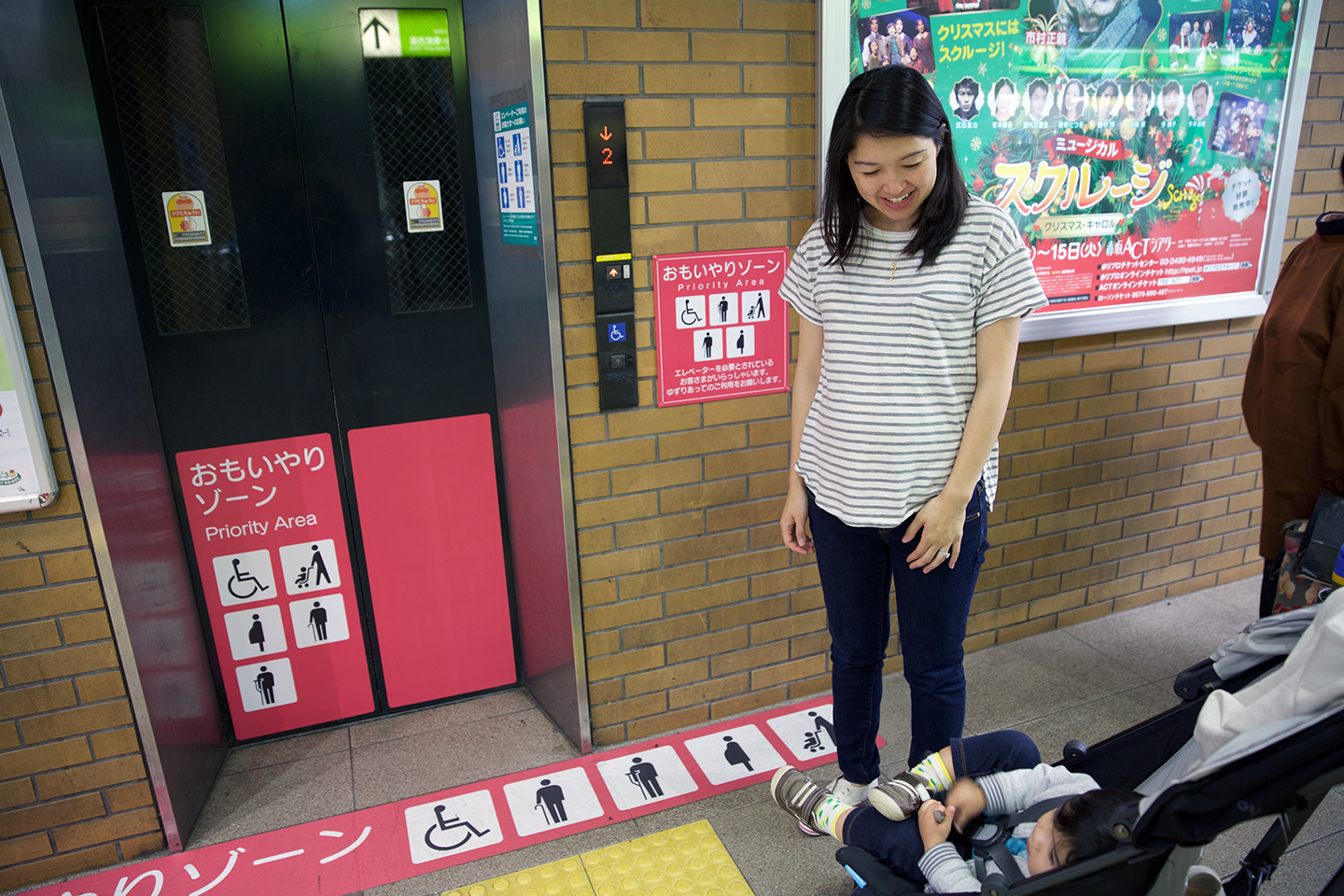
Bel and Daren waiting for the priority elevator at Ebisu station
One other nice thing that we saw was the importance of priority access to elevators for families, disabled, and elder people. These elevators were marked with bright pink signs and not only seen in train stations, but a few department stores as well.
Taxi cabs:
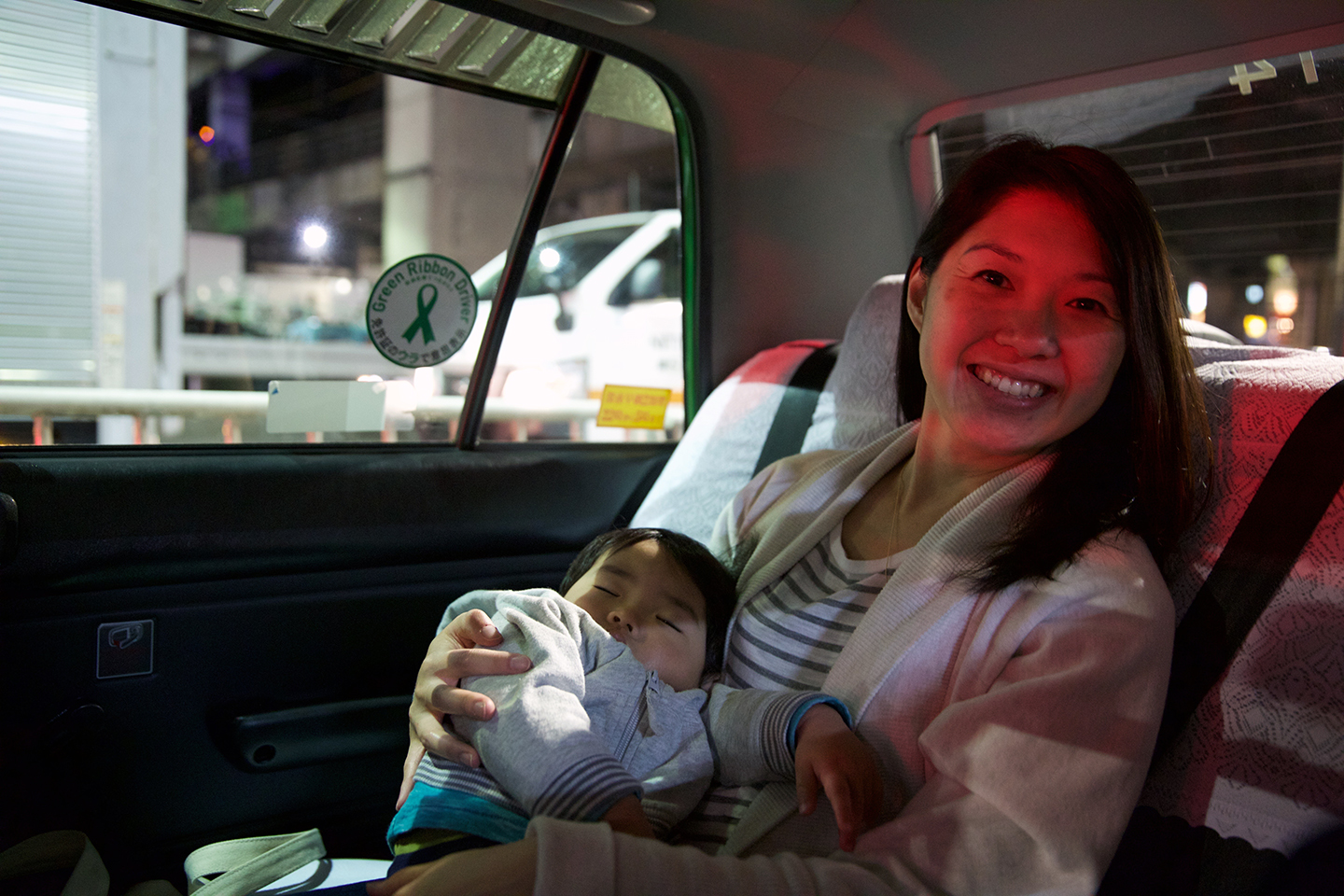
Daren sleeping in the taxi ride back to the hotel
Although traveling in a taxi with a baby without a baby seat is a definite no-no in the US, in Japan, they are strangely lax on the concept. We opted for a taxi a couple of times due to mommy fatigue and rainy weather, and also because we didn’t want to battle for a spot on the train with a stroller during rush hour commute times. The taxi driver didn’t think twice accepting us into his cab and we were off to our destination while Daren slept peacefully in mom’s lap. I wouldn’t recommend taking taxis without a baby seat too often, but in some situations it was a pleasant alternative.
Wi-fi Access:
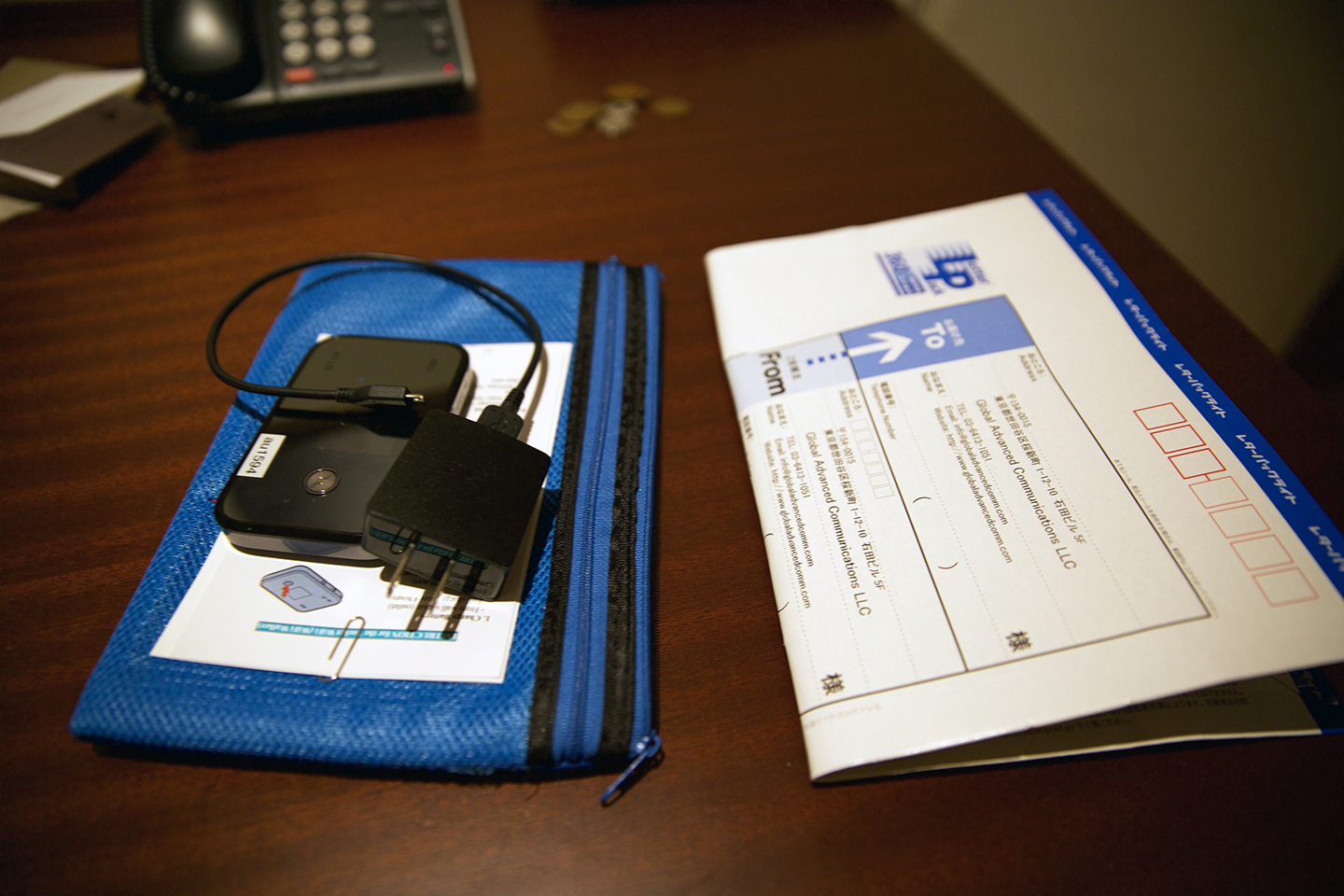
A Pocket wi-fi runs about $80US for 12 days, and multiple devices can access
These days, there are tons of different ways to get reliable international wi-fi access. I’ve always used GlobalAdvanced Comm for all my trips to Japan and it’s been solid every time.
- Reserve online
- Pickup the device at the airport when you land, or have it shipped to your hotel in advance
- When done, place in the pre-paid envelope and drop off at any mailbox before you leave (there’s a mailbox at Narita airport right before you enter security).
No fuss, and you have reliable access to internet your entire trip. You can access multiple devices also, so Bel and I both connect our phones to it at the same time. BTW, Google maps in Japan is amazing for directions! Real-time subway and bus schedules FTW!